
“How much do dental implants cost?” It’s a fair question. Implants are a bigger investment than a filling or a cleaning. Dental implant costs vary widely from patient to patient, but there are dependable ranges to plan around, and it helps to know what drives the price. Here’s a straightforward breakdown of what dental implants typically cost and why.
Dental Implant Cost Factors
A dental implant usually includes three parts. A titanium post gets surgically placed into the jawbone, where it fuses over time to act as a sturdy artificial root. An abutment attaches to the top of the post and holds the crown in place. A crown is the visible tooth-shaped piece on top, custom-made to match the size, shape, and color of your natural teeth.
- A single tooth implant usually costs in the low to mid thousands. Simple cases with good bone density tend to sit toward the lower end.
- Multiple implants cost more overall, but often less per tooth than treating each one separately.
- Implant-retained dentures, including All-on-4 style solutions, involve a higher upfront cost since they replace an entire arch.
Bone grafting, sinus lifts, and other preparatory work can also add to the cost of dental implants. Not every patient needs these steps, and the imaging done at your consultation is what tells us for sure.
How Our Imaging Technology Affects the Cost of Dental Implants
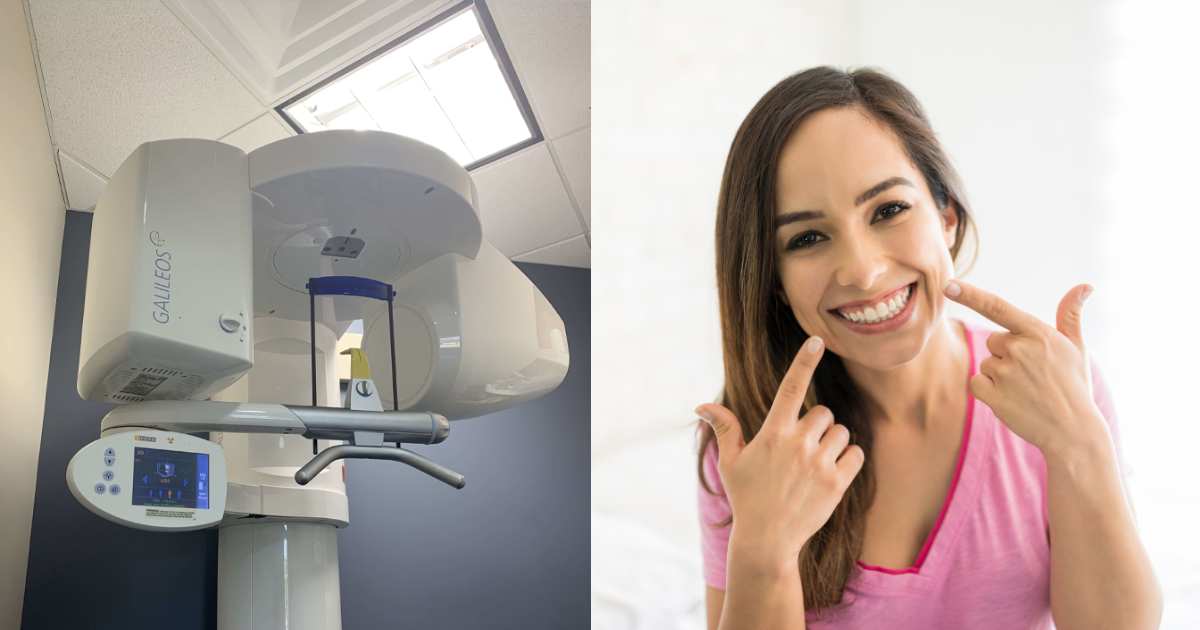
Before placing any implant, we need a detailed picture of your jaw. This shows us your bone volume, where the nerves run, and how close the sinuses are to the planned implant site. Crownsville Dental & Wellness Solutions uses a Galileos 3D Cone Beam Computed Tomography (CBCT) imaging system with CEREC® integration to capture all of this in one visit.
This isn’t just a nicer picture than a traditional dental X-ray. It changes how we plan and price the whole treatment.
- One scan instead of several. A single low-dose 3D scan captures the entire jaw, which gives us a much better picture than flat 2D images.
- Guided surgery. The 3D data lets us map the exact position, angle, and depth of your implant. That precision helps prevent the kind of misplaced implant that can lead to costly corrections later.
- In-house crown design. Because our imaging system integrates with CEREC CAD/CAM technology, we can design and produce your custom crown in our office instead of shipping it to an external lab. That reduces turnaround time and lab fees.
- Fewer appointments overall. Imaging, planning, and restoration all happen under one roof, which means fewer visits, fewer handoffs between providers, and fewer chances for miscommunication.
None of this changes the fact that dental implants cost money to do well, but it does make that cost more predictable. You’re not paying for a separate imaging center, a referral to an outside surgeon, and a third-party lab. The American College of Prosthodontists has noted that improperly placed implants can compromise function and appearance, and fixing them is often more burdensome than the original treatment.
You’re paying for a single connected process built around getting your implant right the first time. If you’d like to see how this kind of imaging and CAD/CAM technology actually works, Dentsply Sirona’s pages on the Galileos Comfort Plus imaging system and CEREC digital chairside dentistry go into more detail on the hardware behind it.
Why the Cost of Dental Implants Varies So Much
No two mouths are the same, so no two treatment plans are either. These are some of the main factors that shape the final number.
- Number of teeth being replaced. One implant costs less than a full arch, but the per-tooth price often drops as the case grows.
- Bone health. Patients who have been missing teeth for years sometimes need bone grafting first. This adds a treatment phase and an added cost.
- Type of restoration. A single crown on an implant is simpler than a bridge or a full denture supported by multiple implants.
- Technology used. As noted above, in-house imaging and CAD/CAM design can reduce visits and outside lab fees compared with practices that outsource these steps.
- Dentist experience. Implant placement combines surgical skill with restorative artistry. A dentist who plans the first time carefully helps you avoid the added cost of correcting a poorly placed implant down the road.
Does Insurance Cover Dental Implants?
Most dental insurance plans treat implants as a cosmetic or elective procedure, so your coverage may be limited. Your plan may cover part of the crown portion, but exclude the surgical placement. Call your insurance provider directly and ask specifically about implant coverage, since policies vary widely.
Financing Options for Dental Implants
Financing can help make treatment costs more manageable. Many patients also use a phased treatment plan, completing one implant or one arch at a time as their budget allows. Crownsville Dental offers in-house 0% financing. Contact us for details.
Getting an Accurate Quote
Every mouth is different, and pricing depends on your bone structure, how many teeth need replacing, and whether you need any preparatory work first. When you schedule a consultation with us, you’ll get a Galileos 3D CBCT scan, a clear treatment plan, and a quote you can rely on.
Crownsville Dental & Wellness Solutions welcomes patients from Crownsville, Gambrills, Annapolis, Davidsonville, and across Anne Arundel County. Our office also offers restorative dentistry and general dentistry services if you need other work done alongside your implant treatment.
Call 410.923.0110 or request a consultation to get started.